
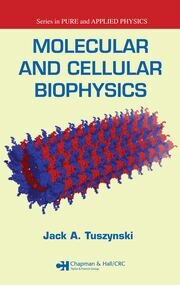

Molecular and Cellular Biophysics

Molecular and Cellular Biophysics

Series:
Published:
Author(s):
Free Standard Shipping

Purchasing Options

Hardback
$85.95
Add to cart
ISBN 9781584886754
Cat# C6757
 

Features

  • Provides comprehensive coverage of both molecular and cellular biophysics using a quantitative approach
  • Covers small-scale structures that include DNA, RNA, and hydrogen bonds
  • Explores large-scale systems, such as basal bodies, mitochondria, and vesicles
  • Examines the biophysical processes of exciton energy transfer, muscle contraction, and mitosis
  • Includes worked examples, exercises and references at the end of each chapter, and a glossary
  • Contains many illustrations to enhance comprehension of the material

A solutions manual is available upon qualifying course adoptions.

Summary

From quantum theory to statistical mechanics, the methodologies of physics are often used to explain some of life's most complex biological problems. Exploring this challenging yet fascinating area of study, Molecular and Cellular Biophysics covers both molecular and cellular structures as well as the biophysical processes that occur in these structures. Designed for advanced undergraduate and beginning graduate students in biophysics courses, this textbook features a quantitative approach that avoids being too abstract in its presentation.

Logically organized from small-scale (molecular) to large-scale (cellular) systems, the text first defines life, discussing the scientific controversies between mechanists and vitalists, the characteristics of living things, and the evolution of life. It then delves into molecular structures, including nucleic acids, DNA, RNA, interatomic interactions, and hydrogen bonds. After looking at these smaller systems, the author probes the larger cellular structures. He examines the cytoplasm, the cytoskeleton, chromosomes, mitochondria, motor proteins, and more. The book concludes with discussions on biophysical processes, including oxidative phosphorylation, diffusion, bioenergetics, conformational transitions in proteins, vesicle transport, subcellular structure formation, and cell division.

Table of Contents

WHAT IS LIFE?
Hierarchical Organization of Knowledge
General Characteristics of Living Systems
Artificial Life
Biological Information, Information Processing, and Signaling
Origin of Life
Emergence, Intelligence, and Consciousness

WHAT ARE THE MOLECULES OF LIFE?
Nucleic Acids, DNA, RNA
Generalized Ester Bonds
Directionality of Chemical Bonds
Types of Interatomic Interactions
The Hydrogen Bonds and Hydrophobic Interactions
Amphipatic Molecules in Water Environments
Structure of Proteins
Structure of Nucleic Acids

WHAT IS A BIOLOGICAL CELL?
Cytoplasm
Cytoskeleton
Tubulin Isotype Homology Modeling
Anisotropic Elastic Properties of Microtubules
Centrioles, Basal Bodies, Cilia, and Flagella
Networks and Meshworks of Protein Filaments, Stress Fibers, and Tensegrity
Cell Nucleus and Chromosomes
Mitochondria and Proton Pumps: Energy Generation and Utilization in the Cell
Cytochrome Oxidase Enzymes
Membranes and Vesicles
Motor Proteins and Their Role in Cellular Processes
Directed Binding as a Model of Kinesin Walk
Other Structures
Large Polar Molecules

WHAT ARE LIFE PROCESSES?
Oxidative Phosphorylation
Diffusion Processes
Proton Transport and Bioenergetics
Electronic and Ionic Conductivities of Microtubules and Actin Filaments
Mechanisms of Exciton Energy Transfer in Scheibe Aggregates
Conformational Transitions in Proteins
Vesicle Transport and Molecular Motors
Muscle Contraction
Subcellular Structure Formation
Cell Division

GLOSSARY
INDEX

Questions, Problems, and References appear at the end of each chapter.

Editorial Reviews

"…The processes of life do have characteristics that are not easily understood in terms of equilibrium or rate equations, powerful though those ideas are, and Tuszynski’s book gives a valuable reminder of this wealth of behaviours. In other words, it is a very stimulating book, and one that research scientists should read because it will surprise them, usually in ways they will welcome. It is also the sort of book graduate students should read to prevent them getting too lost in the routine of technique."
—Marshall Stoneham, Contemporary Physics, Vol. 50, No. 3, May–June 2009

Textbooks
Other CRC Press Sites
Featured Authors
STAY CONNECTED
Facebook Page for CRC Press Twitter Page for CRC Press You Tube Channel for CRC Press LinkedIn Page for CRC Press Google Plus Page for CRC Press
Sign Up for Email Alerts
© 2013 Taylor & Francis Group, LLC. All Rights Reserved. Privacy Policy | Cookie Use | Shipping Policy | Contact Us