

Complex IT Project Management

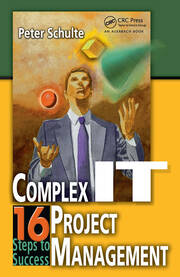
Complex IT Project Management: 16 Steps to Success

Published:
Author(s):
Free Standard Shipping

Purchasing Options

Hardback
$87.95
Add to cart
ISBN 9780849319327
Cat# AU1932
eBook
ISBN 9780203494547
Cat# TFE1014
 

Features

  • Create an effective project plan without getting lost in a Gantt chart
  • Interact successfully with management and project team members
  • Prepare for the unexpected by referring to "The Big Thirteen Interrogatory," a proven process that enables you to understand the players and environment that may negatively impact your project
  • Develop project requirements that are true to scope, standards, and plausibility
  • Validate technical solutions, even if you lack in-depth subject matter expertise
  • Check on the true status of your project, and react quickly to emerging issues
  • Identify the key attributes of successful project managers
  • Summary

    Project Managers leading massive IT projects--defined as projects rolling out deliverables across geographic boundaries with budgets ranging well into the millions--need a unique level of expertise and an arsenal of personal and professional skills to successfully accomplish their tasks. Large IT initiatives inherently contain business conditions, technology quirks, and participant and managerial agendas that make them exceedingly difficult to execute.

    Complex IT Project Management: Sixteen Steps to Success reveals a project management process that the author has proven to be successful in many complex real-world projects. Each step is presented in its logical sequence, with the connections between management methods and project goals clearly defined. The author often refers to the successful tactics he employed, providing you with a strategy to overcome the challenges found in even the most intricate IT projects.

    This book stands as the perfect tool for project managers at all levels of experience who plan to tackle a high-profile initiative. It also serves as a guide for project sponsors searching for the right manager, and for consultants recommending best practices for the workplace.

    Table of Contents

    PROJECT IS MORE THAN ITS TECHNICAL DELIVERABLES
    Provisioning ISDN
    How Did We Do?
    The Project in Context
    The Big Thirteen
    Discovery Techniques
    Interviewing Techniques


    LEARNING REQUIREMENTS IS OUR FIRST PRIORITY
    The Trouble with Requirements
    ISDN Case Study Requirements
    How Requirements Are Derived
    An Airport Is Born
    Applying the Big Thirteen
    Develop an Issues List
    Eliminate as Many Issues as Possible
    Assign Real Issues to the Right Party
    Why You Assign Issues
    Turning Issues into Assumptions
    Socialize Your Assumptions
    Analyze and Incorporate Feedback
    Get Universal Signoff on Requirements
    Address the Feasibility of Implementing Requirements
    Turning Requirements into Specifications
    Mapping Requirements to the Project Plan
    Work Flow Analysis


    USING TECHNOLOGIES TO MEET REQUIREMENTS
    Why Technologies Should Be Used
    How Technologies Really Get Used
    How Technologies Fail
    How to Determine if It Is Going to Work
    Understand Your Technologies
    Review Validation Plan
    Review Risk
    Review Potential Integration Issues
    Review with Customer and Beneficiaries
    Submit to Technology Review Board if Required
    Commence Validation Processes, and Adjust as Required
    Proceed with Rollout, Invoking Your Plan Bs as Required

    DEVISING AN IMPLEMENTATION STRATEGY PRECEDES SCHEDULING
    What Is an Implementation Strategy?
    That Was an Implementation Strategy
    Why Do I Need an Implementation Strategy?
    How Do I Use This Implementation Strategy?
    Building Your Implementation Strategy
    Finding Gaps with the Implementation Strategy
    Implementation Strategy Components
    An IT Implementation Strategy Example
    A Vendor Management Implementation Strategy


    PLAN B IS AN INTEGRAL PART OF THE PROJECT PLAN
    What Is a Plan B?
    A Word About Risk
    When Is Risk Risk?
    Identifying Risk
    Murphy's Law
    Uncovering Project Risk
    Uncovering Beneficiary Risk
    Uncovering Corporate Risk
    What to Do with These Questions
    The Cost of Risk Management
    Next Steps in Risk Planning
    Plan B Strategies
    Plan B Triggers
    Sample Trigger
    Pulling Your Plan B Together
    Sample Plan B: A Not So Wide Area Network


    Writing The Plan
    Planning Process Objectives
    Six Steps towards Successful Planning
    Starting the Schedule Build
    The Project Pyramid
    How to Use the Pyramid
    Getting Serious about Your Schedule
    Drafting the First Master Schedule
    Selling the Critical Path
    Getting Ready for the Detail
    Finally, Your Project Calendar
    Managing Team Lead Plan Detail
    Pulling It All Together

    HOW TO STATUS YOUR PROJECT
    Rules of Engagement
    The Politics of Bad News and Escalation
    The Shell Answer Man
    Raising a Project "Jeopardy"
    Checking Status against the Project Plan
    Status Report: Smooth Sailing
    Status Report: Rough Waters Ahead
    Handling Challenges to the Schedule
    Generic Reactions
    Adjusting Your Schedule
    Issues List
    When Late Matters
    Quality of Deliverables


    MANAGING PROJECT INFORMATION
    Documentation Guidelines
    What You Should Document
    Communications Strategy
    Meetings


    MANAGE YOUR DOLLARS
    Where Did the Number Come From?
    Budgetary Assumptions
    Budgetary Source Data
    Creating Estimates
    Budget Laundry List
    Things Can Look Odd under the Budgetary Microscope
    Handling Prospective Shortfalls
    Service Delivery and Cost Recovery
    When Is an Approved Expenditure Approved?
    Where Does the Money Go?
    Tracking Expenditures
    Overruns


    UNDERSTANDING AND MANAGING VENDORS
    About Vendors
    Existing Vendors
    New Vendors
    Vendor Selection Process
    Doing RFPs Right
    Thirteen Steps of Vendor Management


    MANAGE YOUR TURNOVER
    The Handoffs
    Production Support Models
    Understanding the Model
    Support Requirements
    Runbooks
    Negotiating Support


    HANDLING YOUR TEAM
    Working with People as a Manager
    Leadership
    Your Role versus Theirs
    Decision Making
    Infighting
    Coaching and Mentoring
    Ownership
    Follow the Bouncing Ball
    Project Team Table Manners


    MANAGING CUSTOMERS AND BENEFICIARIES
    How It Is Supposed to Work
    The Customer May Not Always be Right ...
    Lead, Follow, or Get Out of the Way
    Speeds and Feeds
    The Dynamics of Public Presentations
    Managing Objections
    You Can Run but You Cannot Hide
    Evaluating Beneficiary Risk
    Recognizing Scope Creep
    Reacting to Scope Creep
    Joint Planning with Beneficiaries
    Roles and Responsibilities
    User Acceptance Testing
    Service Levels
    Through the Looking Glass from the Other Side
    Bearing Bad News
    Negotiations


    HANDLE YOUR MANAGEMENT
    How Much Autonomy do Project Managers Have?
    Management Traits to be on the Lookout For
    Management Style
    Problem Solving
    Your Manager's Political Tendencies
    Procrastination
    Conflict Avoidance
    Risk Aversion
    Grasp of Theory and Details
    Communications Skills
    Basic Rules of Boss Management


    LESSONS LEARNED
    How Do People Learn?
    Setting the Goals for Your Lessons Learned
    How Well Was Scope Implemented?
    Positive Contributing Factors
    Negative Contributing Factors
    Gathering the Team Together
    Samples
    Example: SouthPointe Lessons Learned


    BECOMING THE PROJECT ADULT
    A Day in the Life
    Becoming the Project Adult
    What Makes a Great Project Manager?
    Experience and Training
    Professional Skills
    Personal Attributes
    About Consulting Project Managers
    And Finally…

    Textbooks
    Other CRC Press Sites
    Featured Authors
    STAY CONNECTED
    Facebook Page for CRC Press Twitter Page for CRC Press You Tube Channel for CRC Press LinkedIn Page for CRC Press Google Plus Page for CRC Press
    Sign Up for Email Alerts
    © 2013 Taylor & Francis Group, LLC. All Rights Reserved. Privacy Policy | Cookie Use | Shipping Policy | Contact Us