
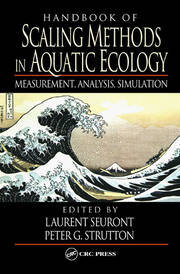
Handbook of Scaling Methods in Aquatic Ecology

Handbook of Scaling Methods in Aquatic Ecology: Measurement, Analysis, Simulation

Published:
Editor(s):
Free Standard Shipping

Purchasing Options

Hardback
$174.95
Add to cart
ISBN 9780849313448
Cat# 1344
eBook
ISBN 9780203489550
Cat# TFE807
 

Features

  • Includes nonlinear analysis techniques and the application of concepts from chaos theory to problems of spatial and temporal patterns
  • Investigates scaling of environmental variability in aquatic systems
  • Examines physical-biological coupling at spatial scales ranging from millimeters to thousands of kilometers
  • Incorporates new modeling techniques for observing small-scale biological processes such as zooplankton behavior
  • Summary

    The evolution of observational instruments, simulation techniques, and computing power has given aquatic scientists a new understanding of biological and physical processes that span temporal and spatial scales. This has created a need for a single volume that addresses concepts of scale in a manner that builds bridges between experimentalists and theoreticians in aquatic ecology.

    Handbook of Scaling Methods in Aquatic Ecology: Measurement, Analysis, Simulation is the first comprehensive compilation of modern scaling methods used in marine and freshwater ecological research. Written by leading researchers, it presents a systematic approach to dealing with space and time in aquatic ecology. This is a compendium that analyzes themes related to the response or behavior of organisms to processes occurring over multiple spatial and temporal scales.

    This book covers: novel techniques for data collection, focusing on processes over a broad range of scales (from bacteria to ocean basins); newly-developed concepts and data analysis algorithms; and innovative computer models and simulations to mimic complex biological processes.

    The Handbook serves as a reference volume for investigators seeking insight into new experimental approaches and data analysis, as well as the sensor design required for optimal sampling. Many of the algorithms and models provided are directly applicable to your experimental data. This comprehensive treatment of scaling methods and applications can help foster a unified understanding of subject matter among the modeling, experimental, and field research communities.

    Table of Contents

    MEASUREMENTS
    Comparison of bio-optical scale resolution from CTD and microstructure measurements, by F. Wolk, L. Seuront, H. Yamazaki and S. Leterme
    Measurement of zooplankton distributions with a high-resolution digital
    camera system, by M.C. Benfield, C.J. Schwehm, R.G. Fredericks, G.
    Squyres, S.F. Keenan and M.V. Trevorrow
    Planktonic Layers: physical and biological interactions on the small-scale, by T.J. Cowles
    Scales of Biological-Physical Coupling in the Equatorial Pacific, by P.G. Strutton and F.P Chavez
    Acoustic remote sensing of photosynthetic activity in seagrass beds, by J.-P. Hermand
    Multiscale in situ measurements of intertidal benthic production and respiration, by D. Davoult, A. Migné and N. Spilmont
    Spatially Extensive, High Resolution Images of Rocky Shore Communities, by D. Blakeway, C. Robles, D. Fuentes and H.-L. Qiu
    Food web dynamics in stable isotope ecology: time integration of different trophic levels, by C.M. O'Reilly, P. Verburg, R.E. Hecky, P.D. Plisnier and A.S. Cohen
    Synchrotron-based infrared imaging of Euglena gracilis single cells, by C. Hirschmugl, M. Bunta and M. Giordano
    Signaling during mating in the pelagic copepod, Temora longicornis, by J. Yen, A. Prusaz, M. Caun, M.H. Doall, J. Brown and J.R. Strickler
    Experimental validation of an individual-based model for zooplankton swarming, by N.S. Banas, D.P. Wang and J. Yen

    ANALYSIS
    On skipjack tuna dynamics: similarity at several scales, by A.P. Solari, J.J. Castro and C. Bas
    The temporal scaling of environmental variability in rivers and lakes, by H. Cyr, P.J. Dillon and J.E. Parker
    Biogeochemical variability at the sea surface: how it is linked to process response times, by A. Mahadevan and J.W. Campbell
    Challenges in the analysis and simulation of benthic community patterns, by M.P. Johnson
    Fractal dimension estimation in studies of epiphytal and epilithic communities- strengths and weaknesses, by J. Davenport
    Rank-size analysis and vertical phytoplankton distribution patterns, by J.G. Mitchell
    An introduction to wavelets, by I.M. Dremin, Ivanov, O.V. and V.A. Nechitailo
    Fractal characterization of spatial distributions of plankton on Georges Bank, by K.E. Fisher, P.H. Wiebe and B.D. Malamud
    Orientation of sea fans perpendicular to the flow, by T.R. Osborn and G.K. Ostrader
    Why are large, delicate, gelatinous organisms so successful in the ocean's interior?, by T.R. Osborn and D. Barber
    Quantifying zooplankton swimming behavior: the question of scale, by L. Seuront, M.C. Brewer and J.R. Strickler
    Identification of iterations in copepod populations using a qualitative
    study of stage-structured population models, by S. Souissi and O. Bernard


    SIMULATION

    The importance of spatial scale in the modeling of aquatic ecosystems, by D.L. DeAngelis, W.M. Mooij and A. Basset
    Patterns in models of plankton dynamics in a heterogeneous environment, by H. Malchow, A.B. Medvinsky and S.V. Petrovskii
    Seeing the wood for the trees, and vice versa: pattern-oriented ecological modelling, by V. Grimm and U. Berger
    Spatial dynamics of a benthic community: applying multiple models to a
    single system, by D.D. Donalson, R.A. Desharnais, C.D. Robles and R. Nisbet
    Effects of Langmuir circulation on buoyant particles, by E. Skyllingstad
    Modeling of turbulent intermittency: multifractal stochastic processes and their simulation, by F.G. Schmitt
    An application of lognormal theory to moderate Reynolds number turbulent structures, by H. Yamazaki and K.D. Squires
    Numerical simulations of the flow field at the scale size of an individual copepod, by H. Jiang
    Can turbulence reduce the energy costs of hovering for planktonic organisms?, by H. Yamazaki, K.D. Squires and J.R. Strickler
    Utilising different levels of adaptation in individual-based modelling, by G. Huse and J. Giske
    Using multi-agent systems to develop individual based models for copepods:
    consequences of individual behavior and spatial heterogeneity on the
    emerging properties at the population scale, by S. Souissi, V. Ginot L. Seuront and S.I. Uye
    Modeling planktonic behavior as a complex adaptive system, by A.K. Yamazaki and D. Kamykowski
    Discrete events based Lagrangian approach as a tool for modelling predator prey interactions in the plankton, by P. CaparroyMEASUREMENTS
    Comparison of bio-optical scale resolution from CTD and microstructure measurements, by F. Wolk, L. Seuront, H. Yamazaki and S. Leterme
    Measurement of zooplankton distributions with a high-resolution digital
    camera system, by M.C. Benfield, C.J. Schwehm, R.G. Fredericks, G.
    Squyres, S.F. Keenan and M.V. Trevorrow
    Planktonic Layers: physical and biological interactions on the small-scale, by T.J. Cowles
    Scales of Biological-Physical Coupling in the Equatorial Pacific, by P.G. Strutton and F.P Chavez
    Acoustic remote sensing of photosynthetic activity in seagrass beds, by J.-P. Hermand
    Multiscale in situ measurements of intertidal benthic production and respiration, by D. Davoult, A. Migné and N. Spilmont
    Spatially Extensive, High Resolution Images of Rocky Shore Communities, by D. Blakeway, C. Robles, D. Fuentes and H.-L. Qiu
    Food web dynamics in stable isotope ecology: time integration of different trophic levels, by C.M. O'Reilly, P. Verburg, R.E. Hecky, P.D. Plisnier and A.S. Cohen
    Synchrotron-based infrared imaging of Euglena gracilis single cells, by C. Hirschmugl, M. Bunta and M. Giordano
    Signaling during mating in the pelagic copepod, Temora longicornis, by J. Yen, A. Prusaz, M. Caun, M.H. Doall, J. Brown and J.R. Strickler
    Experimental validation of an individual-based model for zooplankton swarming, by N.S. Banas, D.P. Wang and J. Yen

    ANALYSIS
    On skipjack tuna dynamics: similarity at several scales, by A.P. Solari, J.J. Castro and C. Bas
    The temporal scaling of environmental variability in rivers and lakes, by H. Cyr, P.J. Dillon and J.E. Parker
    Biogeochemical variability at the sea surface: how it is linked to process response times, by A. Mahadevan and J.W. Campbell
    Challenges in the analysis and simulation of benthic community patterns, by M.P. Johnson
    Fractal dimension estimation in studies of epiphytal and epilithic communities- strengths and weaknesses, by J. Davenport
    Rank-size analysis and vertical phytoplankton distribution patterns, by J.G. Mitchell
    An introduction to wavelets, by I.M. Dremin, Ivanov, O.V. and V.A. Nechitailo
    Fractal characterization of spatial distributions of plankton on Georges Bank, by K.E. Fisher, P.H. Wiebe and B.D. Malamud
    Orientation of sea fans perpendicular to the flow, by T.R. Osborn and G.K. Ostrader
    Why are large, delicate, gelatinous organisms so successful in the ocean's interior?, by T.R. Osborn and D. Barber
    Quantifying zooplankton swimming behavior: the question of scale, by L. Seuront, M.C. Brewer and J.R. Strickler
    Identification of iterations in copepod populations using a qualitative
    study of stage-structured population models, by S. Souissi and O. Bernard


    SIMULATION

    The importance of spatial scale in the modeling of aquatic ecosystems, by D.L. DeAngelis, W.M. Mooij and A. Basset
    Patterns in models of plankton dynamics in a heterogeneous environment, by H. Malchow, A.B. Medvinsky and S.V. Petrovskii
    Seeing the wood for the trees, and vice versa: pattern-oriented ecological modelling, by V. Grimm and U. Berger
    Spatial dynamics of a benthic community: applying multiple models to a
    single system, by D.D. Donalson, R.A. Desharnais, C.D. Robles and R. Nisbet
    Effects of Langmuir circulation on buoyant particles, by E. Skyllingstad
    Modeling of turbulent intermittency: multifractal stochastic processes and their simulation, by F.G. Schmitt
    An application of lognormal theory to moderate Reynolds number turbulent structures, by H. Yamazaki and K.D. Squires
    Numerical simulations of the flow field at the scale size of an individual copepod, by H. Jiang
    Can turbulence reduce the energy costs of hovering for planktonic organisms?, by H. Yamazaki, K.D. Squires and J.R. Strickler
    Utilising different levels of adaptation in individual-based modelling, by G. Huse and J. Giske
    Using multi-agent systems to develop individual based models for copepods:
    consequences of individual behavior and spatial heterogeneity on the
    emerging properties at the population scale, by S. Souissi, V. Ginot L. Seuront and S.I. Uye
    Modeling planktonic behavior as a complex adaptive system, by A.K. Yamazaki and D. Kamykowski
    Discrete events based Lagrangian approach as a tool for modelling predator prey interactions in the plankton, by P. Caparroy

    Editorial Reviews

    "The articles … are an excellent selection using the scaling methods in measurement, analysis, and simulation. … [I] recommend the book for graduate students and researchers in an academic institution."
    - E-Streams, Vol. 7, No. 9, Sept. 2004

    Related Titles

     
    Textbooks
    Other CRC Press Sites
    Featured Authors
    STAY CONNECTED
    Facebook Page for CRC Press Twitter Page for CRC Press You Tube Channel for CRC Press LinkedIn Page for CRC Press Google Plus Page for CRC Press
    Sign Up for Email Alerts
    © 2013 Taylor & Francis Group, LLC. All Rights Reserved. Privacy Policy | Cookie Use | Shipping Policy | Contact Us